Last Updated: November 26, 2026
Quick Summary
Balance exercises for seniors at home train your body to stay steady while standing, shifting weight, or walking. Start with a countertop or sturdy chair within arm's reach, wear firm shoes, and keep the space clear. Do each move for 30 to 60 seconds, rest, and repeat twice.
- A 2025 systematic review linked Tai Ji Quan interventions to roughly 31% to 58% reductions in falls.
- Keep knees slightly bent, hold your core, and breathe during each move.
- Three to five sessions a week works well for most people; short and frequent beats long and rare.
- Add difficulty only when steady: eyes closed, softer surface, or slower holds.
- For seated options, do toe taps and leg lifts from a chair.
Table of Contents
- Balance Exercises for Seniors at Home: A Safe Starter Routine
- 10-Minute Balance Exercises for Seniors
- How Often Should Seniors Do Balance Exercises?
- Frequently Asked Questions
Balance Exercises for Seniors at Home: A Safe Starter Routine
A 2025 systematic review of randomized controlled trials linked Tai Ji Quan interventions to roughly 31% to 58% reductions in falls, according to the review published on PubMed Central. Balance exercises for seniors at home train your body to stay steady while standing, shifting weight, or walking. Start with a countertop or sturdy chair within arm's reach, wear firm shoes, and keep the space clear.
Before you begin, run this quick check:
10-Minute Balance Exercises for Seniors
Ten minutes is enough: do each move for 30 to 60 seconds, rest, and repeat twice.
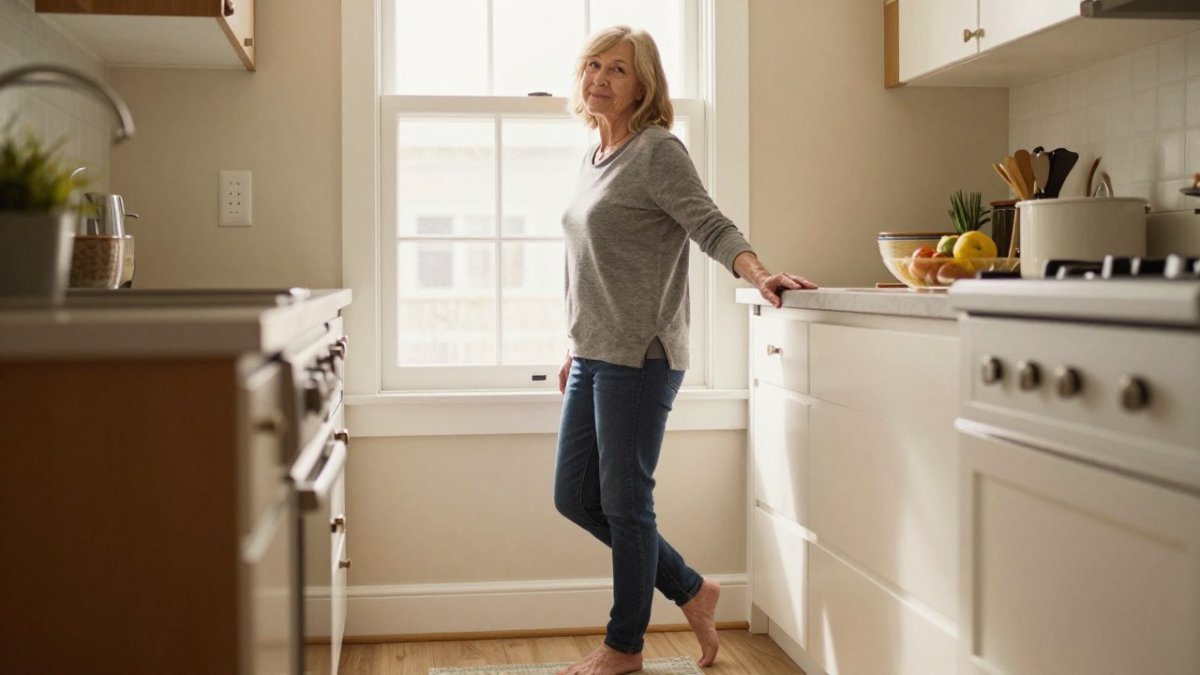
- Weight shifting. Shift slowly side to side.
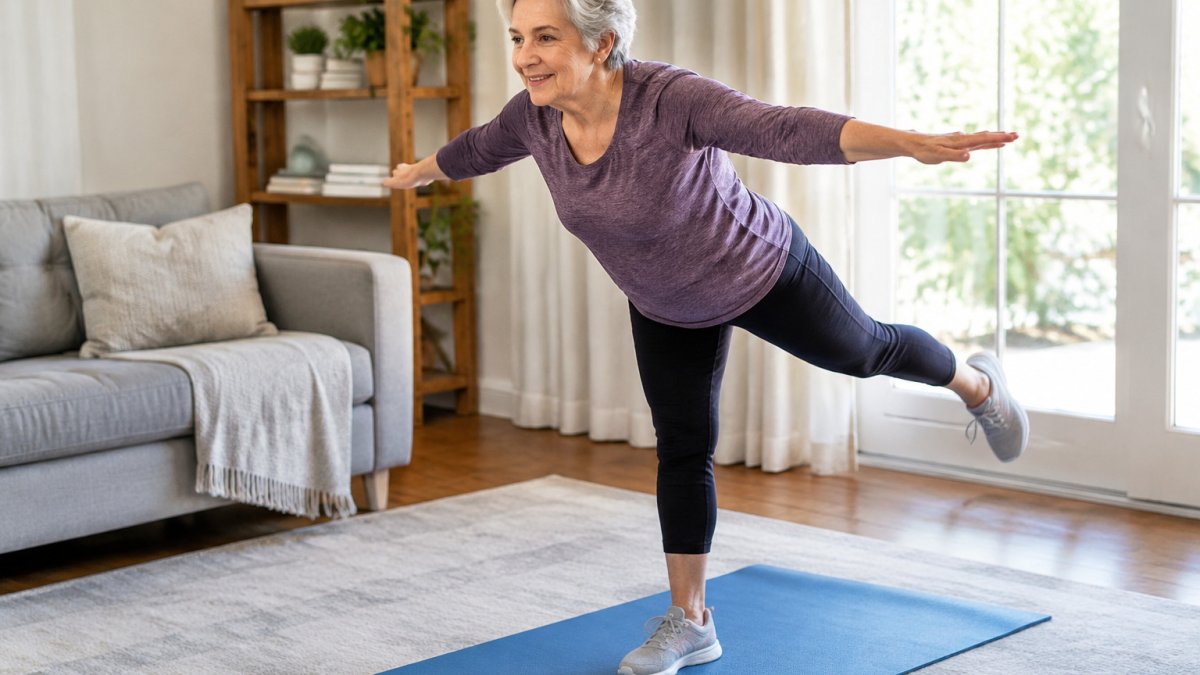
- Single-leg stance. Hold a countertop, lift one foot, switch sides.
- Standing march. Lift each knee slowly.
- Heel-to-toe walk. Walk a tightrope line, heel touching toe.
- Sideways walking. Step side to side, then add a grapevine.
- Rock the boat. Shift weight front to back, then side to side.
- Toe taps and leg lifts. Tap one foot forward, then lift it out to the side.
Keep knees slightly bent, hold your core, and breathe. For seated options, do toe taps and leg lifts from a chair. A 2025 randomized controlled study led by J. Zhou found that home-based strength and balance work improved balance and cut fall risk in older adults, per the study on PubMed.
Here is the full 10-minute routine at a glance, with each move and how long to hold it.
| Exercise | What to do | Time |
|---|---|---|
| Weight shifting | Shift slowly side to side | 30 to 60 seconds |
| Single-leg stance | Hold a countertop, lift one foot, switch sides | 30 to 60 seconds |
| Standing march | Lift each knee slowly | 30 to 60 seconds |
| Heel-to-toe walk | Walk a tightrope line, heel touching toe | 30 to 60 seconds |
| Sideways walking | Step side to side, then add a grapevine | 30 to 60 seconds |
| Rock the boat | Shift weight front to back, then side to side | 30 to 60 seconds |
| Toe taps and leg lifts | Tap one foot forward, then lift it out to the side | 30 to 60 seconds |
Time
How Often Should Seniors Do Balance Exercises?
Three to five sessions a week works well for most people; short and frequent beats long and rare. Try two or three moves daily, then build to a full 10-minute routine, adding difficulty only when steady: eyes closed, softer surface, or slower holds.
Want structure and accountability? Meet our NASM-certified trainer. Explore coaching that comes to you or online personal training. Ready to start? Let's talk about your free consultation.
Falls change lives, and steady practice lowers that risk. Practical Fitness brings certified, in-home coaching to your living room, with customized workout plans, the Optimum Performance Training model, and nutrition guidance built around your goals. Get started with Practical Fitness and train for the balance that keeps you independent.
Frequently Asked Questions
Which balance exercises can seniors safely do at home?
Start with supported movements: standing marches, weight shifting side to side, toe taps, and heel-to-toe walking along a countertop. Keep a chair or counter within arm's reach, stand on a steady surface, and wear supportive shoes. Add single-leg stance only once the supported versions feel steady, and stop if you feel unsteady.
How often should seniors do balance exercises?
Aim for two to three short sessions per week, with rest days between, and build toward daily practice as tolerance improves. Ten minutes per session is enough to start. Consistency matters more than session length, so pick a time you will actually keep.
Can an older adult regain balance?
Yes, balance responds to training at any age. Pair the exercises with a home safety review: a 2025 quasi-experimental study reported that tailored home-safety training combined with exercise reduced fear of falling and improved home safety. Progress is gradual, so track small gains like holding a stance a few seconds longer.